
Recipients of TAA International Honours
2025
Development Agriculturalist: Professor Peter Gregory
For leading and inspiring research and innovation for agricultural sustainability and food security at international and national levels
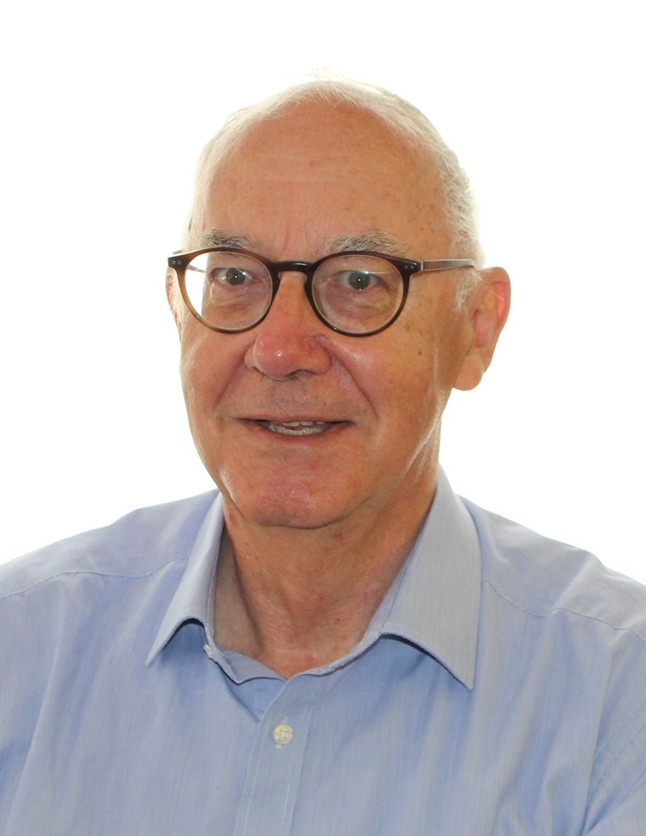
Peter Gregory has broad experience in sustainable agriculture, national and global food security, an impressive list of publications and a forward looking focus on crops for the future. He qualified as a soil scientist, graduating with a BSc from University of Reading and a PhD from University of Nottingham. Following graduation he held teaching and research positions of increasing seniority at Nottingham and Reading Universities, culminating in the professorship in soil science, Dean of the Faculty of Agriculture and Food and Pro Vice-Chancellor responsible for research and innovation. He also spent from 1990 to 1994 as a principal research scientist with CSIRO in Perth, Australia, where, for a year, he led the Dryland Crops and Soils Research Programme. From 2005 to 2015 he held Chief Executive positions, first at the Scottish Crop Research Institute and later at East Malling Research.
Peter currently chairs Crops for the Future UK, which investigates diversification of human diets through currently underutilised crops , including a range of cereals, vegetables and fruits. He also chairs, or is a member of, several UK committees in areas of food safety, nutrition, cereals and oilseeds production and horticultural crops. His tropical experience includes serving as Director of Research for Crops for the Future, Malaysia, PhD supervision at ICRAF, Nairobi, and consultancies on DFID projects in Nepal and Kenya. He also worked on ODA and EU projects in India, Kenya, Niger, The Philippines and Mauritius, including projects with ICARDA and ICRISAT.
Professor Gregory presented a talk entitled “Belowground contributions to tropical crop yields and sustainability“. The slides may be viewed here.
Young Development Agriculturalist (UK based): Chawezi Miti
For innovative research in agricultural statistics leading to improvements in boundary line methodology for crop yield gap analysis

Chawezi Miti is currently completing a PhD at the University of Nottingham on boundary line methodology for yield gap analysis. The fundamental contribution of his thesis is the critical review of the use of models which laid the foundation for the improvements to the boundary line methodology. He identified inconsistencies in the current application of boundary line methods, particularly due to the lack of standardized fitting techniques and statistical inference. His research emphasized the need for rigorous exploratory data analysis to justify the use of boundary line models and underscored the agronomic significance of boundary line model interpretations. As part of his PhD research he conducted participatory workshops with a range of international scientists in Nairobi and Harare to test out and improve the methods. He also taught a PhD course at Wageningen University in the Netherlands.
Chawezi is a highly talented researcher who, well within four years, has three papers published in reputable journals as well as an online, open-source methods manual and associated software. He is also the recipient of several awards from his academic education in soil science at the University Zambia, where he later worked as a research fellow on a UKRI/GCRF project examining soil and groundwater behaviour under contrasting crop management systems.
In this project Chawezi played a leading role in managing instrumentation on the experimental sites (soil water probes, an electrical resistivity tomography array and groundwater monitoring boreholes). He led a study within the project to evaluate pedotransfer functions, which built on his research for his MSc and in the data analysis for a further paper in the project in which he was a joint lead author. From 2018 he took on additional responsibilities as a part-time lecturer at the University of Zambia.
Chawezi presented a talk entitled “Boundary Line Methodology for Yield Gap Analysis of Farm Systems“. The slides may be viewed here.
Young Development Agriculturalist (International): Francesco Carnevale Zampaolo
For coordination and scaling up of sustainable rice production systems and agroforestry in Africa in line with climate change commitments

Francesco Zampaolo is an agricultural development specialist with a dual background in social sciences and agriculture, and five years of experience blending fieldwork in Africa with managerial roles. He has expertise in building collaborations with international organisations and the private sector and is currently consulting for four African governments to develop breakthrough strategies for scaling productive and sustainable rice farming.
Francesco graduated with a BSc in international development from Universita di Bologna, and MSc from University of Reading researching agro-ecological approaches for smallholder farmers.
He won a scholarship for a work placement in Zambia as part of research into structural and microbial soil analysis and farmers’ perceptions of soil and macrofauna in Zambia and southern Italy.
This built on his previous work in Zambia on agroforestry with NGOs and he continues to support Tree Zambia NGO in preparing agro-forestry proposals. He is the lead author of four publications on rice intensification and conservation agriculture.
Francesco currently leads the land husbandry specialist group for TAAI and is a member of ExCo.
Francesco presented a talk entitled “Scaling up the System of Rice Intensification“. The slides may be viewed here.
Award of Merit: Richard Baines
For networking with students and young professionals, initiating TAAI – university links and effective chairmanship of UK south west branch

Richard Baines holds a PhD from University of Reading based on research on legumes in pastures. He has pursued an academic career culminating in the post of senior academic in charge of postgraduate courses in sustainable agriculture and food security and in international rural development at the Royal Agricultural University, Cirencester.
He has shown outstanding commitment to his students and has networked with them after leaving the RAU, taking great interest in their progress and the relevance of their subsequent work. He nominated one student – Aditi Mali – for a YDA award, which she received in 2021.
Richard has authored and co-authored numerous papers and articles on a wide variety of issues including greenhouse gas emissions from agriculture, climate-smart agriculture, food security, food safety and community development.
Richard is a member of ExCo and has been very active in recent years, taking on the chairmanship of the South West Branch and the even more challenging task of universities coordinator. He also took the lead in drafting a TAAI position paper on climate change that was presented at the UNFCCC COP in 2021.
Award of Merit: John Harris
For long standing support to UK south west branch and chairmanship of Bicton Overseas Agricultural Trust
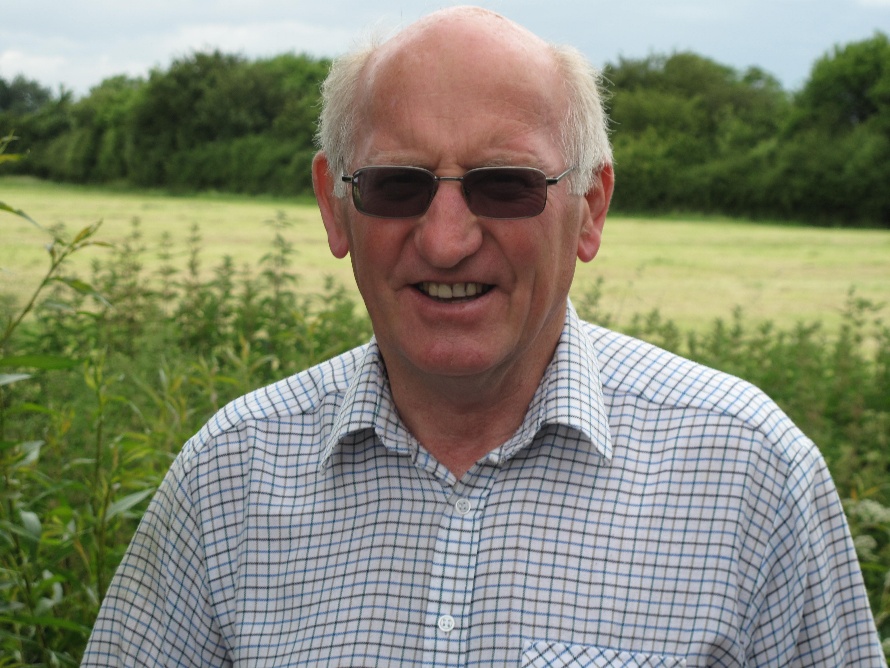
John Harris graduated from the University of Reading. He then conducted research at Makerere University in Uganda on the effects of heat stress on early embryo mortality in Bos taurus dairy cattle, leading to an MSc. After three years in Malawi as a Livestock Officer, he returned to North Somerset to farm Holsteins and sheep. Latterly he managed the SW training area for the Defence Training Estate. In retirement, he manages an Iron Age Fort and is an Internal Drainage Board member.
John is an enthusiastic and long-serving member of the SW Branch and he also currently chairs the Bicton Overseas Agricultural Trust (BOAT), a charity established in 1991 to improve tropical agricultural development through management training. He is the author of papers and reports on relieving dairy cow stress in the tropics, and is the compiler of a book ‘African Anecdotes’ published in 2022.
2024
Development Agriculturalist: Professor Ken Giller
For innovative leadership, research and capacity development on plant production and soil fertility in African smallholder farming systems

Ken Giller, Professor Emeritus at Wageningen University, has been at the forefront of research in plant production and soil fertility for over 30 years. He has worked extensively in tropical regions of South and South-east Asia, Latin America and Africa, but his focus for the past 25 years has been on smallholder farming systems in sub-Saharan Africa. He is the author of five books and has had more than 480 papers published in peer-reviewed, international journals. He is a highly-cited researcher (among the top 1% worldwide) since 2016. At the same time, he is always keen to visit farmers in situ and learn from their own unique experiences.
Professor Giller has supervised over 100 students for PhD degrees, over half being from Lower- and Middle-Income Countries many from Africa, as well as numerous students for MSc and MPhil research theses. He has designed and coordinated MSc programmes and designed and directed short courses. Most recently he led the N2Africa programme for Bill & Melinda Gates Foundation as an advocate for legume integration in African cropping systems.
Ken has been a leader in understanding how biophysical heterogeneity both within farms and at a landscape scale affects crop performance and the implications of this for targeting recommendations. He is not afraid to challenge conventional wisdom and prescribed solutions given the complexities of the natural, socio-economic and political environments in which smallholder farmers live. He challenges dogma in science when he sees it and encourages scientists to communicate in simple and clear ways.
Ken’s advice, direction and external review have been sort by national and international organisations (public and private) including most recently as a Member of the Scientific Advisory Committee of the African Plant Nutrition Institute, Gatsby Africa, and Bill & Melinda Gates Foundation. He is an editor of Global Food Security and a member of the Editorial Board of Outlook on Agriculture.
Following receipt of his award, Prof Giller gave a presentation entitled “From fields to farms to farming systems – It’s all about context!”
A recording of this presentation may be viewed on the right.
Lifetime Achievement Award: Dr Jim Waller
For international leadership in the identification and control of crop plant diseases, improving the livelihoods of smallholders in Africa and Asia

Dr Jim Waller has had a long and very distinguished career in plant pathology. Based in the UK, for 30 years he led the Plant Clinic at the International Mycological Institute within CABI. This was truly a unique global centre of expertise, to which farmers and researchers from all around the world sent in samples of new and unidentified diseases of crop plants for diagnosis. This tremendously valuable service was world-renowned, and Jim was respected internationally as the expert at its heart. As a CABI Emeritus Senior Fellow, he is still regularly called upon for his expert advice as new crop disease problems are encountered. The expert team he assembled around him in CABI have all been inspired and motivated by his passion and enthusiasm and by his technical expertise.
The Global Plant Clinic service has been widely drawn upon by UK government development assistance advisers in the field for many years, as they encountered a wide range of new disease problems that threatened the success of agricultural and rural development programmes.
Dr Waller was frequently called upon from different parts of the word to fly out and ‘troubleshoot’ outbreaks of new diseases that threatened crops of national importance, such as the outbreak of coffee rust in the highlands of Papua New Guinea and of a major new banana disease in Uganda. If such disease epidemics had been allowed to run unchecked, then whole agri-food industries could have been wrecked, at huge cost to the farmers and countries concerned. More recently, as national capacities have developed, the need for a central diagnostic resource has reduced. Jim then led an exemplary shift in functions of the Global Plant Clinic, towards developing and supporting field-based local plant clinic services that respond directly to farmers’ needs. He oversaw this key change, which led to the development of CABI’s Plantwise programme, a hugely successful programme that has now brought sustainable plant health services right to where farmers need them, being delivered though trained local experts.
As a highly qualified research manager in his own right, Dr Waller was directly commissioned by the Overseas Development Administration and then DFID (now FCDO) to manage and oversee the UK-funded research programme on perennial crops. By pursuing and commissioning valuable research lines on the sustainability of crops such as coffee, cocoa and oil palm, he actively encouraged and enabled measures that, among others, increased the integration with forest cover as shade and reduced the demand for forest clearance and new plantings, measures that we now all see as vital in the battle to reduce agricultural impacts on climate change and biodiversity and to sustain productivity in the long term. Many East African scientists consider Jim to be the champion of coffee health in Africa and with his open, inspiring and inclusive manner – and his ready and infectious sense of fun – regard him as an excellent role model, who has really made a difference in their lives. His research crucially identified and characterised the causal pathogen of coffee berry disease, which can cause losses of up to 80% of the crop and poses a major threat to other key production areas such as Latin America, which it has yet to reach.
(https://en.wikipedia.org/wiki/Colletotrichum_kahawae)
This characterisation has opened new opportunities for breeding for resistance and even for possible biocontrol by harmless microorganisms, providing new hope for the future of the coffee industry in Africa.
Jim’s commitment to developing national capacities also extends to a long list of postgraduate students and young professionals to whom he has provided direct mentoring and supervision and has inspired to be the researchers of tomorrow. His passion and enthusiasm make him a natural teacher and many around the world owe their love of the subject to his vibrant and engaging approach.
Dr Waller has been the author or co-author of five books and some 140 research papers. He notably led the expert team compiling what has become the standard text for any field plant pathologist around the world; the Plant Pathologist’s Pocketbook; one of the most requested books ever published by CABI.
Jim Waller sadly passed away on November 25th 2024. His son, Martin Waller, accepted the Award on his behalf.
Award of Merit: Nigel Verity
For outstanding support and initiative in the creation of TAA International, particularly in redeveloping the website and establishing an operational membership database

Nige was recruited as a part-time employee of TAA-International in early 2023 to serve as our Membership Secretary. He has since transformed our membership records, reduced the numbers of non-paying and under-paying members, and welcomed and supported new members very professionally. Nige has also taken on the role of Web Manager to stand in for the current incumbent who has been unable to fulfil this role due to work commitments.
Nige has managed and guided the design and launch of our new website, and has been further improving it, and managing its content on a daily basis ever since. This has included designing our FESP scheme, our Mentoring database and our searchable Journal Index. He also manages our social media accounts assistant.
He acts as our general administrator, taking on a host of other tasks such as editing recordings of Annual Lectures and other seminars, serving as an ExCo member, advising on many IT issues, advising on communications, and supporting the TAAF. It is no exaggeration to say that without Nige’s input, the TAAI would now be winding down. His inputs far exceed those for which he has been contracted and he has committed more time to TAAI than almost anyone else during 2023 and 2024. Nige is also not a member of TAAI, but despite this and despite being paid, there is no doubt that his contribution to TAAI has been so great that he justifies an exception being made in order to present him with an Award of Merit.
2023
Development Agriculturalist: Dr Camilla Toulmin
For leadership and commitment to agricultural research, development and poverty reduction for rural communities in arid and vulnerable environments of Africa and Asia

Camilla Toulmin is a researcher focused on agricultural, social, economic, and environmental development in dryland Africa. Her continued research in Mali has tracked development and change over a period of 35 years.
From 1987-2002 Camilla established and ran the IIED Drylands Programme, becoming IIED’s Director for 15 years from 2003, a time of increasing awareness of the links between environment and development.
Camilla has served as an expert on a number of international and national bodies and has also taken part in bringing science to a broader policy audience
These include the Foresight Lead Expert Group on the Global Panel on Agriculture and Food Systems for Nutrition (2015-16), the UN Committee on Food Security High Level Panel of Experts’ study on International Investment in Agriculture and Food Security (2011), and the UK Government Foresight Lead Expert Group on the Future of Food and Farming to 2050 (2009- 11). She chaired the Board of the International Center for Agricultural Research in Dry Areas (ICARDA) from 2012-15, steering the Institute through a difficult time with the closure of its headquarters in Aleppo.
Camilla has been an author or co-author of many books and academic papers on topics including climate change, land rights, natural resource management and sustainable agricultural development.
Her latest book, based on her research in Dlonguebougou, Mali, available at: Land, Investment, and Migration – Camilla Toulmin – Oxford University Press (oup.com) .
Young Development Agriculturalist (UK Based): Caleb Bram
For innovative research providing key insights into coffee agro-forestry in Vietnam as a nature-based solution

Caleb Bram has been conducting research into the environmental and economic trade-offs of coffee agroforestry in Vietnam’s central highlands as part of a MBiol degree at Oxford University. His research received support through a TAAF grant.
Caleb’s research provides key insights into coffee agroforestry as a nature-based solution that meets the needs of both people and the planet. Insights gained from this study can inform the development of locally relevant and context-specific policies for coffee farmers in the Central Highlands of Vietnam.
His research is innovative and complex in that it adopts a multi-disciplinary approach to compare economic and environmental outcomes of different coffee production systems, backing up the results by rigorous statistical analysis.
Award of Merit: Dr Jim Watson
For outstanding support in establishing and managing the TAAF since its inception in 1989

Dr Jim Watson has had a long and successful career as agronomist and adviser in cotton research and development in many countries across Africa and Asia spanning over 50 years. Jim has been an active and valued member of the TAA/TAAI since it was established in 1979. He was a founder member of the TAAF in 1989, which enabled the TAA to be successful in gaining its charitable status.
He was Secretary of TAAF Committee for over 20 years and has mentored several of the TAAF awardees.
In 2019 he co-authored the 40th year history of the TAA with Elizabeth Warham.
2022
Development Agriculturalist: Professor Jules Pretty
For innovation in understanding the relationships between people and natural resources determining the sustainability of agriculture, agroecosystems and food systems

Jules Pretty is a distinguished author and a leading researcher, bringing together cross-disciplinary perspectives around sustainable agricultural intensification. His career has focused on exploring, innovating and acting on the intersection between people and natural resources and between society and environment. His speciality has been the sustainability of agriculture and food systems in both tropical and temperate countries and ecosystems, on the health benefits of natural places, on the impact of consumption behaviours on climate, and on the participatory and engagement processes best deployed to create platforms for progressive change.
Jules led the Sustainable Agriculture Programme at the Institute for Environment and Development, and established the Centre for Environment and Development at the University of Essex. He is a Fellow of the Royal Society of Biology and of the Royal Society of Arts, Manufactures and Commerce and has served on several councils, committees and panels, provided expert advice to governments and the private sector. He received the OBE for services to sustainable agriculture in 2006, and has also been honoured by the British Science Association, the Indian Ecological Society and Ohio State University. He is the sole author of eight books and the Chief and Founding Editor of the International Journal of Agricultural Sustainability, and the co-author of 135 peer-reviewed papers, and is among the top 0.1% most cited scientists in the World.
Some particular achievements relevant to agriculture in the tropics and globally are:
- Coined the term ‘sustainable intensification’, providing a structure for narratives of how agricultural progress may be achieved while respecting the environment.
- His book ‘Regenerating Agriculture’ (1995) established the scientific basis for incorporating agroecological principles into farming systems.
- He lead a team of scientists and economists in the first national costing of environmental and health externalities of the national agriculture and food system, later co-authoring the UK national ecosystem assessment.
- The International Journal of Agricultural Sustainability (which he established and edits) offers a creative voice for authors from emerging economies. Its priorities are to set out how transitions can be made to deliver sustainability and social justice at farm, community, regional, national and international levels. It is in the top quartile of multidisciplinary agricultural journals and has a high impact factor.
- Member of UK scientific committee on releases to the environment and of UK Genetic.
Young Development Agriculturalist (UK Based): Dey Freeman Tarusikirwa
For research on reproductive health of farm animals and its potential application to the livelihoods of smallholder farmers in Zimbabwe and beyond
Dey Tarusikirwa is a dedicated and accomplished communicator and diligent researcher keen to apply his findings widely for the benefit of sustainable development and in particular of animal welfare and human health within that. His research work has focussed on:
- Epidemiology of zoonotic causes of reproductive failure in farm animals from communal land areas of Zimbabwe;
- Assessing the awareness and risk perceptions of smallholder farmers towards zoonotic causes of abortion in farm animals
- Assessing the impacts of farm animal reproductive losses to the livelihoods of smallholder farmers
Dey has clinical, teaching and research experience as well as field experience from interactions with both smallholder and commercial farmers during ambulatory field services and herd health consultations, inspiring his interest in One Health. He is currently working at Bristol Veterinary School on ozonation of drinking water for improved health of cattle, poultry, and will shortly be taking up a teaching post at the University of Central Lancashire.
Young Development Agriculturalist (International): YPARD
For providing a network for young professionals to share experience and develop collective actions, strengthening involvement of youth in agricultural research and policy

Young Professionals in Agricultural Development (YPARD) is a unique network with over 32,000 members in 70 countries.
- Building a strong network that links organizations and individuals around the world, sharing their common interests and concerns and developing collective actions to address these.
- Elevating the voices and advocacy of youth in agricultural systems and policy processes.
- Capacity building and information sharing through formal and informal exchange of information, e.g. on funding, job opportunities and furthering education.
- Promoting agriculture by advertising and creating opportunities in agriculture, including mentorship in agricultural business start-ups, research, extension and policy and advocacy.
Through its activities YPARD opens opportunities for engaging young people in agricultural development and ensures that the voice of youth is heard in global platforms such as the FAO Council and the Global Forum on Agricultural Research. It is young people that will bear the brunt of global challenges and their engagement is essential in addressing them.
Award of Merit: Elizabeth Warham
For dedicated steadfast support to the TAAI as General Secretary and Trustee, including leadership in the development of strategy, business plans and partnerships

Dr Elizabeth Warham has a background in plant pathology and expertise and experience in plant sciences and technology development more broadly across the agri-food sector. She currently works as a team leader in the Department for Trade.
Elizabeth has been a member of ExCo for twenty years and has been General Secretary since 2004. In addition to organising annual meetings and social events she has participated in several working groups including, inter alia, for the 2007 Business Plan and the 2018 strategy refresh, and has been a technical editor of the TAAI journal.
Elizabeth also helped to establish the All-Party Parliamentary Group on Agriculture for Food and Development.
2021
Development Agriculturalist: Geoff Hawtin
For leadership in development and implementation of plant genetic resources policy and establishment of institutions for germplasm research and conservation to safeguard global food security

Plant genetic resources underpin global food security and how food systems must evolve under the stresses of a changing climate.
Geoff Hawtin has been a global leader and has clearly made outstanding contributions in this field, initially as a research scientist and even more importantly as a driver of policy to ensure that genetic resources are held in trust for humanity and are accessible to small farmers and rural people in less economically developed countries.
Among Geoff’s key achievements are:
- Establishment and leadership of the CGIAR system-wide programme on genetic resources.
- Negotiation of agreements to determine intellectual property rights of CGIAR germplasm collections
- Input to the International Treaty on Plant Genetic Resources and its Benefit Sharing Fund.
- Leading the establishment of the Global Crop Diversity Trust and Svalbard Seed Vault.
- Governance and management of CGIAR centres, including IPGRI/Bioversity and CIAT, serving successively as DG and Board Chair of the latter centre and negotiation of the alliance between the two centres.
He is also the author or co-author of 19 book chapters and 85 articles in scientific and technical journals. He is a long standing member of TAAI and has been responsible for reporting on IARC news and activities in the TAAI Journal from 2012 -2020.
Young Development Agriculturalist (Overseas-based): Aditi Solanki Mali
For pioneering efforts in engaging urban planners and citizens in the value of urban food systems to service dietary needs of urban dwellers in India

Aditi graduated with an M.Sc in Sustainable Agriculture and Food Security from the Royal Agricultural University in 2018, where she was awarded the distinction and best research project prize.
On returning to India her subsequent work has focused on food systems in the urban context, bringing together disciplines of horticulture and urban planning.
She founded Mali Greens in January 2021 in the middle of the COVID pandemic, growing a wide variety of vegetables (microgreens) in a vertical indoor farm in Ahmedabad and selling products to the urban market.
Award of Merit: Jim Waller
For technical editorship of the TAAI Journal ‘Agriculture for Development’ during its evolution from the Newsletter, and for support to the London and SE Branch
Jim has had a distinguished career as a plant pathologist.
The award recognises his dedicated service for a decade to TAAI on ExCo. He worked very effectively with Garry Robertson in the preparation and publishing of the TAAI Newsletter and transformed the Newsletter into the ‘Agriculture for Development’ journal format which was developed further by those who followed them.
Award of Merit: David Wendover
For stalwart support to the SW Branch and to the Bicton Overseas Agricultural Trust, serving as Chairman and Trustee

Following ICTA and more than 20 years of residential contract work in Africa specialising in livestock production and project management David returned to the UK in 1985.
After joining the TAAI he and John Russell were involved with the establishment and convening of the SW Branch (the first to form) for a number of years. He still serves on the committee.
In 1995 he became a trustee of BOAT and its chairman for the past 7 years. BOAT enhances management, planning, business and training skills of senior NGO personnel running smallholder agricultural and community development programmes, and certificate/diploma level training institutions, in East and Central Africa. BOAT has forged strong links with TAA.
2020
Development Agriculturalist: Professor Robert Chambers
In recognition of life-long commitment to the needs of smallholder farmers and for bringing fresh and inspirational thinking to engaging them in agricultural research for development
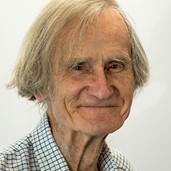
Prof Chambers was proposed by Amir Kassam and seconded by Andrew Bennett.
Robert is currently a Research Associate and Professor Emeritus at the Institute of Development Studies, University of Sussex. He is author of a large number of publications including “Rural Development: Putting the last first” which was a game changer when it was published in 1983.
He was the champion of bottom-up and participatory approaches to rural development and the prime intellect in the design of the rural livelihoods approach that was subsequently a mainstay of DFID’s programme.
Robert is currently working mainly on participatory methodologies, how we know, what we know, do not know and get wrong in development, and community-led sanitation.
Award of Merit: Keith Virgo

Keith Virgo was proposed by Jim Ellis-Jones and seconded by Paul Harding.
Keith is a long term member of TAAI and was Chairman from 2014 until standing down at the end of 2019. Along with being a very active Chair he was also Web Manager (since 2011), Coordinator of the Environmental Conservation Group (since 2010) and convenor of the East Anglia Regional Group, roles he currently retains (2020).
Award of Merit: Jim Ellis-Jones

Jim Ellis-Jones was proposed by Amir Kassam and seconded by Andrew Bennett.
Jim has served as Treasurer to TAAI and has been a Trustee of the Association since 2008. He has also been involved in developing future TAAI strategy.
Award of Merit: Ray Bartlett

In recognition of his services in support of the very active South West regional group .
Ray was proposed by John Wibberley and seconded by Tim Roberts. He has been Secretary to the Group for the past seven years and has been a resolute and diligent member of the SW TAAI Committee.
Award of Merit: Mike Pash

In recognition of his services in support of the very active South West regional group .
Mike, who was proposed by David Wendover and seconded by John Wibberley, has been the long term Treasurer of the SW group. He is also a Trustee and Course Coordinator of BOAT (Bicton Overseas Agricultural Trust).
2019
Young Development Agriculturalist (International): Aaron Banda

Awarded in recognition of his work in agricultural education, focused on primary and secondary schools in Copperbelt Province, Zambia.
The award was received on Aaron’s behalf by Agnes Maina, TAAF
Young Development Agriculturalist (UK): Emma Amadi
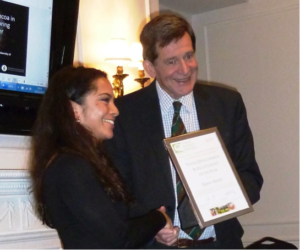
In recognition of her work on economically, socially and environmentally sustainable sourcing relationships linking smallholder cocoa farmers and chocolate manufacturers in Ghana.
Development Agriculturalist: Amir Kassam

For championing conservation agriculture globally as a means of managing land productively and sustainably while responding to climate change.
Award of Merit: John Wibberley
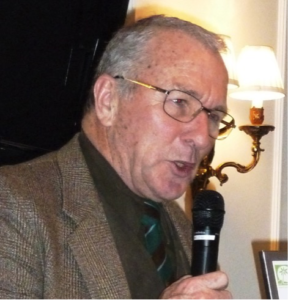
In recognition of his active and enthusiastic leadership of the South West TAAI group.
Award of Merit: Paul Harding

In recognition of his editorship of the TAAI journal ‘Agriculture for Development’, and in guiding its evolution to an internationally respected publication.
Award of Merit: Linda Blunt
For services in developing, updating and maintaining an efficient web-based TAAI membership system that provides accurate information on membership status.
2018
Development Agriculturalist: Mark Holderness
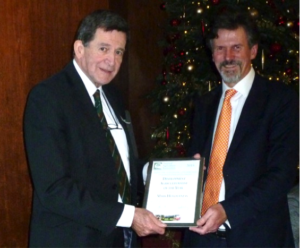
For championing the views of farmers and their organisations, placing them at the centre of the international research agenda.
Young Development Agriculturalist (International): JB Madhukesh

For improving the incomes and livelihoods of farmers in Karnataka, India, through business partnerships linked to capacity building services.
Award of Merit: Terry Wiles
In recognition of outstanding support to TAA’s London and South-East Branch programme, and to the All-Party Parliamentary Group on Agriculture and Food for Development.
Award of Merit: Brian Sims
In recognition of outstanding contributions, as author, book reviewer and technical editor, to the improvement of the outstanding contributions, as author, book reviewer and technical editor, to the improvement of the TAA’s journal Agriculture for Development.
2017
Development Agriculturalist: CARE International-UK (CIUK)
For establishing an innovative micro-finance scheme (Lendwithcare), helping entrepreneurs in developing countries to lift themselves out of poverty.
2016
Development Agriculturalist: Dr William Critchley

For contributions to sustainable land management, climate change adaptation, and local innovation.
Young Development Agriculturalists: James Alden and Paul Baranowski
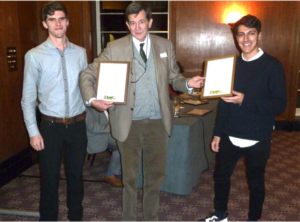
Joint awardees, for developing, manufacturing and marketing a Decision Support Tool for smallholder coffee growers.
Award of Merit: Tim Roberts

For many years of support of, and contributions to, the TAAI SW Group, and for pro-actively promoting the TAA.
2015
Development Agriculturalist: George Rothschild
In recognition of a lifetime of work in agricultural research for development, as a researcher, Director, Director-General, Board Member, Board Chair and Government Adviser, and for supporting the All Party Parliamentary Group on Agriculture and Food for Development.
Award of Merit: George Taylor-Hunt
In recognition of his work over many years for the TAAI as a member of the Executive Committee and as Convenor of the South West Branch.
Award of Merit: Bill Reed
In posthumous recognition of his work over many years for the TAAI as a member of the Executive Committee and as Convenor of the South West Branch.
2014
Development Agriculturalist: Professor John Witcombe
During a lifetime of work, John Witcombe has developed novel strategies for breeding crop varieties.
He advocated client-oriented breeding, developed from participatory varietal selection and participatory plant breeding, with farmers and end users consulted throughout the programme.
Young Development Agriculturalist: Richard Bliault
This award recognises Richard’s extension work in Tanzania, where he has managed the certification with the Rainforest Alliance of the first coffee supply chain in Tanzania, encompassing 7,500 farmers.
He has demonstrated his commitment to development and his persistence to work in rural Africa.
Award of Merit: John Russell
This award recognises John’s contributions to the Tropical Agriculture Association through his service as Chairman of the Tropical Agriculture Award Fund (TAAF) Committee, Convenor of the SW Group, and a Trustee of the Bicton Overseas Agricultural Trust (BOAT).
During a successful career with the World Bank and IFAD, John has also provided a lifetime of service to agricultural extension and training worldwide.
Award of Merit: Antony Ellman
As Chairman of the Tropical Agriculture Award Fund (TAAF) Committee since 2006, Antony has developed links with UK Universities, established evaluation criteria, and ensured that awardees receive competent mentoring. As a result, the TAAF has become a major feature of the TAA.
In addition, Antony has for 20 years promoted Artemisia cultivation by small farmers, for the extraction of the antimalarial drug artemisinin. Some 100,000 small farmers now grow the crop in China, Vietnam, Madasgascar and East Africa, and about 400 million artemisinin treatments are dispensed annually.
2013
Development Agriculturalist: Hugh Harries
In recognition of dedication to bringing together workers in research, development, business and policy-making to identify and disseminate information to support agriculture for development.
Development Agriculturalist: James Brockington
In recognition of his contribution to international agricultural development and greater understanding of issues of poverty reduction and natural resource management through work with the Best Practices Foundation, Karnataka, India and the Erasmus Mundi Sustainable Tropical Forest Programme , Budongo Forest Reserve, Uganda.
2012
Award of Merit: Tony Reynolds
In recognition of his demonstration and promotion of transformational change in agricultural production.
Award of Merit: Hugh Brammer
In recognition of his many years of service to TAA’s publication and advisory work, and his wide ranging professional contribution to agriculture for development.
2011
Development Agriculturalist: Dr Nazmul Haq
In recognition of a lifetime’s work on under-utilised crops for the alleviation of poverty, improved nutrition and the enablement of women in poor rural communities.
Award of Merit: Garry Robertson
For his exemplary service to TAAI in his capacity as Chief Editor and Trustee.
Award of Merit: John Landers OBE
For his outstanding contribution over many years to the science and practice of conservation agriculture for development.
2010
Award of Merit: FARM Africa
In recognition of the organisation’s contribution to agriculture since 1985 through training and support for poor rural communities in improving their food security and livelihoods.
Award of Merit: African Fellowship Trust and Royal Agricultural College
In recognition of their contribution, through the African Land and Food Fellowship programme, to the development of leadership in African agricultural development.
Award of Merit: Amir Kassam
In recognition of his contribution over many years to the sustainability of smallholder agriculture through research, teaching, advocacy and public education.
2009
Development Agriculturalist: Phillip Thornton
In recognition of his contribution to international agricultural development through greater understanding of tropical agricultural systems in informing policies to address climate change, land use and poverty alleviation.
Young Development Agriculturalist: Jonathan Stern
In recognition of his contribution to international agricultural development and to greater understanding of issues of poverty reduction and environmental sustainability through work as a Professional Support Volunteer to Asociación de Pequeňos Productores de Talamanca, Costa Rica May 2008 to July 2009.
Award of Merit: Ian Hill
For his work in the development and analysis of the TAAI re-branding questionnaire.
Award of Merit: Francis Shaxson
For his work as convenor of the Land Husbandry group and contribution to conservation agriculture.
Awards for Service to the TAAI Executive-Committee:
Mike and Mollie Long
Ted Wilmot
Henry Gunston
For all their support with the Royal Show Stand.


