
TAA International Conference 2025 Report
The Development and Use of Biological Agents and Extracts in Tropical Agricultural Systems
Presented at Rothamsted Research on 4th/5th November 2025
Introduction
The TAAI Conference focused on advancements and best practices regarding the use of biological agents in tropical agriculture. The event brought together a diverse group of international experts and practitioners to share their insights and experiences.
Attendance
Approximately 70 participants took part in the conference, engaging both in person and online. This wide participation reflected the growing interest and importance of biological solutions in tropical agriculture. Participation was almost equally divided between those in the room and those joining online.
Conference Highlights
The conference agenda featured presentations from a variety of internationally recognised speakers. These experts covered several key areas related to the use of biological agents and extracts in tropical agriculture, including:

- Identification of effective biological agents and extracts
- Development processes for bringing new biological products to market
- Procedures and standards for registration of biologicals
- Practical applications and use of biological agents in the field
- Consideration of the broader implications of using biologicals in tropical agriculture
The TAAI Conference provided a valuable platform for knowledge exchange and discussion, highlighting the latest trends and challenges in the use of biological agents (biocontrols, biofertilisers and biostimulants) within tropical agricultural systems.
As the world’s oldest agricultural research station, Rothamsted Research provided a very appropriate venue, given its work in promoting and supporting sustainable agriculture worldwide. World Food Prize Laureate Dr Geoff Hawtin highlighted the significance of biologicals as a new frontier to help meet critical challenges in developing agriculture and Martin Broadley welcomed us on behalf of Rothamsted, highlighting their significant research, past and present, on biologicals.

Dr Rob Reeder (CABI) gave an insightful overview of the challenges faced, in a world where pesticide use rose by 60% between 1990 and 2020, with 11,000 deaths and 140,000 suicides from pesticides annually. Human and environmental safety are hence big drivers for development of biologicals; the agricultural biologicals market is now worth $22 billion and is experiencing growth of 8.2% p.a. Nonetheless, key constraints remain – in policy and legislation, training, education and extension and challenges in all the steps required for development through to use. It was noted also that the body of knowledge is skewed heavily towards early discovery and less on addressing all the technical barriers to full development and use.

Jonathan Shoham (S&P Global) emphasized the needs and challenges of a greater focus on biologicals. Market growth in the sector is around 7-8% p.a. for crop protection agents, biofertilisers and biostimulants. Crop protection chemicals are in quite rapid decline and 8 out of the top 20 crop protection products are now under some form of control. Drivers of change include the push for regenerative agriculture practices, increased R&D interest in the sector, the development of resistance to chemical products and pressure from increasing regulation, including ambitious targets for reduced chemical use in European agriculture. Generally, the costs and timelines involved in development of biologicals are much less than for chemicals. However, biologicals still only represent around 6% of the market for crop protection and remain somewhat of a niche due to constraints in production and marketing. The market is consolidating fast, with big agrochemical companies buying out the biologicals companies. Similarly, fertiliser companies are buying into biostimulants and biofertilisers.
These changes should improve access in international markets, provided products are carried through to use. Nonetheless, there are also challenges in switching from chemicals to biologicals. These include shelf life, complex use problems and patterns, narrow spectra of use, a slower speed of kill and the marginal benefits often observed with biostimulants. There has recently been a slow-down in new entrants to the market, reflecting a decline in venture capital availability. In Europe, there is currently a disconnect between the desire to reduce chemical usage – in line with shifts in policy and regulation – and the problem of phasing out chemicals before new alternatives have been developed. The situation in Brazil is very different, there the market has changed very rapidly, as a result of links to innovation startups and fast track regulations.

The challenges and adventure of prospecting for classical biological control agents were well summarised by Harry Evans of CABI, who described the demanding procedures required for identifying and evaluating natural enemies from the native habitats of invasive weeds and insect pests. In their centres of origin, such pests are kept in check by natural predators and competitors, a balance that is destroyed when the plant is moved to a country away from its natural enemies and can become invasive. Finding biological control agents requires a return to the centre of origin and identifying organisms that are highly competitive or predatory to the plant. Results can be dramatic, in the case of the rubber vine smothering 360,000 km2 of Australian native forests, a single application of an evaluated rust fungus caused massive dieback of the rubbervine, bringing back a much-needed balance in the natural vegetation – the rust’s impact visible from the air and the vines described as if ‘painted with custard’. Control was estimated to bring a $350 million saving to agriculture, with priceless benefits to ecosystems.
Comparable examples were given in the hunt for mycoparasites for the control of crop diseases. The approach has now opened new avenues such as the use of endophytic Trichoderma to defend cocoa against the devastating Moniliophthora pod rot, which can cause huge losses when cocoa is taken away from its centre of origin. Trichoderma is here a true endophyte, inducing resistance to the pathogen. Nonetheless, for all the promise of endophytes as natural ‘bodyguards’ for crops taken to ne environments, this remains a race against time – as native forests are cleared on a huge scale, the natural biocontrol agents existing only in these centres of origin are also being lost forever.
Aflatoxins are a major human health concern, especially through badly stored grains and pulses. Aflatoxin contamination has massively affected groundnut exports from Africa, with over 80% of samples having unacceptable contamination levels and directly impacting the health of countless African consumers. Alejandro Ortega-Beltran of IITA described how the isolation and screening of around 7,000 isolates of Aspergillus and from all regions of the world have identified isolates with no aflatoxin-producing genes. These have been multiplied and developed as an inoculum, able to compete with and exclude aflatoxin-producing strains. In essence, application changes the mix of Aspergillus strains in the field and has effectively reduced contamination levels in 90% of fields tested, with only 2-3 % of crops failing to meet acceptable limits.
Usage still has some challenges, the product Aflasafe needs to be applied together with other enabling measures and there is often a need to overcome local regulatory challenges. Scaling up production has been a further challenge; in order to assure supply, local production needs to be greatly increased from experimental levels. It is also necessary to provide farmer training and develop the local supply infrastructure as acceptance is otherwise slow.

Commercialisation challenges are significant in all biological agents and Henry Wainwright (Real IPM) described the challenges and achievements in establishing commercial biocontrol agent production.in Kenya. The combination of fungal and arthropod agents developed and produced at scale have provided particularly useful in the export flower industry where chemical residues are highly regulated. Competition with generic cheap pesticides has made the domestic market more challenging. Lessons learned have included the need to focus on significant pest issues, the value of export constraints as drivers for adoption and yet also the need for effective local registration and regulation procedures. If these are in place, them market forces can drive success. It is also necessary to build confidence among farmers by among other measures involving them directly in the evaluation of biological agents.

The registration of biologicals is clearly a critical issue and a rate determining step in their take-up and commercial success. Stella Simyu of CropLife Africa & Middle East highlighted the very real challenges in registration of biologicals. Key constraints are an absence of a dedicated regulatory framework, the lack of harmonised definitions, the absence of specific data requirements, the long registration processes required and the weak extension services available for subsequent update and use. Compounding these challenges, regulatory requirements vary between countries, even in a region. West Africa’s systems lag well behind those of East Africa and there is little improvement of risk evaluation. The MENA region has poorly harmonised data requirements between countries.
There is a need for more regional approaches to data requirements and review of efficacy, including using data from other countries in the region to fast-track evaluation and regulatory processes in similar countries. Extension and knowledge awareness are also critical needs. There is scope for drawing on best practices elsewhere (e.g. OECD countries) to reduce the complexity and long time requirements of local registration in each country.

Augustus Thomas of the University of West Indies described the complex process of isolation and testing of Bacillus species for soft rot control. Measures required included toxicology tests on mammals, skin sensitisation tests, dose-response reactions, formulation feasibility, cost efficiency and availability of raw materials, and measurement of efficacy over time. Clearly there are no short cuts with many of the procedures required to ensure safety and efficacy of biological products.

Ken Giller (University of Wageningen) explored the evidence around deployment of biologicals for plant nutrition. Clearly, rhizobium inoculants with phosphate fertilisers gives a valuable additive effect and introducing mungbean and soybean can really help improve depleted maize soils. He showed also the challenges in access to such technologies; certified and quality declared seeds can be usefully produced through community-based seed systems, but locally produced inoculants have short shelf-lives and can easily become contaminated.
However, Ken was highly sceptical of the potential for nitrogen fixation in cereal crops, describing how inappropriate N measuring techniques may have given distorted results in plants where there is no real evidence of N-fixing metabolic pathways.
He strongly questioned the validity of such products, which may result from plant hormone effects of bacterial exudates, rather than N fixation as such. In general, rhizobial inoculants work, but face challenges in being taken to scale. Many commercial bioinoculants have yet to show proven value in the field. Biochar and vermiculture are effective, but there are real challenges for both in being scaled-up. Quality standards and regulation are needed throughout the sector.

Atthawit Watcharapongchai (GiZ) described the challenges for scaling up the use of Trichoderma in Thailand. While effective, there are real problems of a lack of awareness of the product and perceived difficulties in application. Nonetheless, when farmers could see the impacts with their own eyes, they were much more willing to adopt the technology. These challenges highlighted the need for new extension systems to be used, to reach many more farmers with simple effective messages and making use of tools such as participatory learning and farmer-to-farmer video.

Jade Bortoletto of Koppert, Brazil showed how a favourable regulatory regime, such as that in Brazil, can markedly enhance uptake and use. Biocontrol agents have been very successful, with more than a doubling of areas under treatment over the last 6 years, so that 56 million ha are now under biocontrol treatments. It is important to recognise that challenges remain – the need to integrate with conventional crop management inputs, the cultural resistance to use through farmers’ scepticism, bureaucracy and a lack of regulatory harmonisation, unreliable data and the currently slow adoption of use in food crops. Nematode control may be a key entry here, given the toxicity of chemical nematicides.

Alan Bullion presented on the situation in Sri Lanka. In 2021 the government placed an embargo on the use of chemical fertilisers and pesticides. It was hoped that this would support the development of biological tools. However, the change was too sudden, without a transitional period the biological sector could not respond, farm productivity declined and costs increased for all.

Belinda Luke described the story of the development of the fungal agent Green Muscle for control of migratory locusts and grasshoppers. This has been a long process, with multiple challenges faced along the way. A key breakthrough was formulation of the spores in oil, rather than water, which has allowed spray application to the locust hoppers without evaporation in the hot dry climates concerned. However, even after isolate identification and formulation and production constraints were overcome, the product has faced further challenges in coming to market – a series of companies have bought the rights to use yet have failed to produce at scale and carry it through to market.
Regulatory requirements have been complex and different for each country and the processes of FAO, which monitors and responds to locust outbreaks, have proved slow and challenging to the timescale required for mass production and use of this effective biocontrol agent in the years when locust plagues become prevalent. There is need to engage with the countries of use to clear the regulatory needs in advance and for them to request from the international system the use of biocontrol of locust swarms rather than extensive chemical spraying.
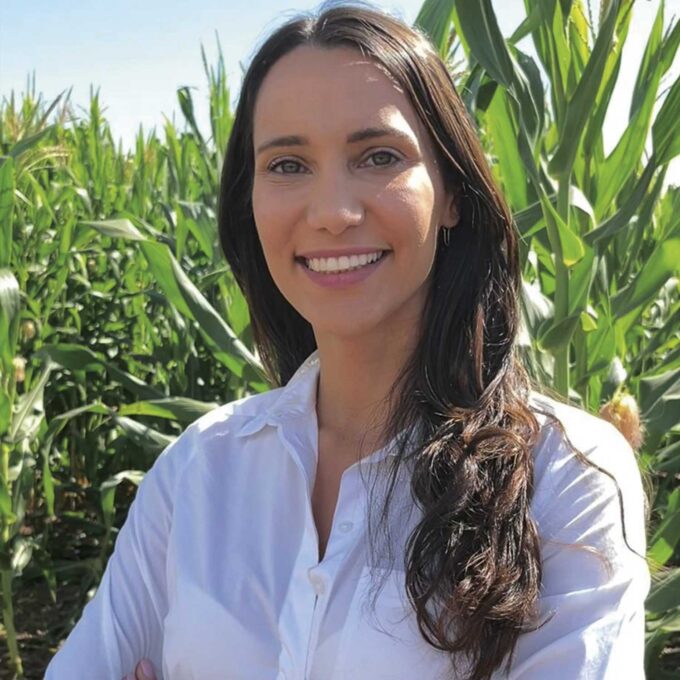
Aline Vick farms Fazenda Estância farm in Brazil. Like many Brazilian farmers she is utilizing biologicals, particularly soil inoculants. She receives technical support with biologicals but even with trusted products she tests them on a small scale in conjunction with her agricultural advisor. Observation is critical especially with factors like high temperatures and dry periods. She is optimistic about their potential but is proceeding, step by step, with their adoption.
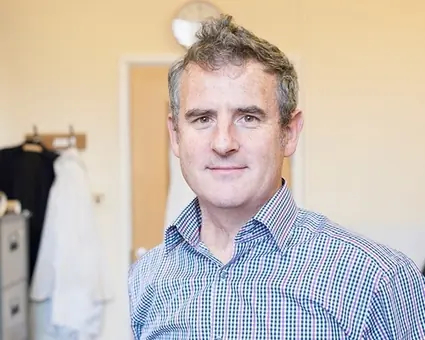
Phil Stevenson from Kew led poster competition, named after his long term friend and colleague, David Grzywacz. Dave was an expert in the use of viruses (specifically baculovirus) for biological control, hence the title of going viral with Dave G. Phil which detailed research highlights from Dave’s distinguished career. Baculoviruses are species specific and therefore safe to non-target organisms. Dave showed their effectiveness against African Armyworm, Spodoptera exempta in Tanzania and then with Ken Wilson to develop an effective formulation for this product.
He worked on Nucleo Polyhedrosis viruses (NPV) in Egypt, Thailand, India and Nepal including against the borer/bollworm, Helicoverpa armigera. When results were not as hoped for in chickpea systems he showed that the baculovirus was being inactivated by Isoflavonoids on the chickpea leaf surface. This was critical as it showed that the NPV is not compatible with host plant resistance in chickpea.
The David Grzywacz poster awards was presented to joint winners:
- Biopesticides Beyond the Hype: A checklist to develop a locally-led, agroecologically-rooted biopesticide sector (Biovision)
- Isolation and Characterization of Plant Growth-Promoting (PGP) Bacteria from Maize, Beans, Cacao, Cardamom and Milpa System, in Guatemala (Mariafernanda Alarcón-Mendez, Lizbeth Coxaj-Alvarez, Adriana Ma. Gil-Herrera, Martha Patricia Herrera-González, Universidad del Valle de Guatemala, Guatemala).
Posters were also submitted from the University of West Indies (Khan and Saravanakumar) on ‘Standardisation and development of biocontrol formulations’ and the University of Agriculture Peshawar (Sidra Ahmed) on ‘Green Synthesis of Nanoparticles from Tropical Plant Extracts for Enhanced Nutrient Uptake and Plant Protection’.


Elizabeth Warham and Julian Smith presented on how biologicals could be positive disruption to how agriculture is currently viewed. For example One Health approaches seek to optmise the health of humans, animals, plants and ecosystems through a multi-sectoral approach. Therefore biologicals should not just be seen as an agricultural tool but the broader implications of their deployment needs to be considered.
In a similar vein, Melanie Surchat from Biovision argued that biological products should not simply be added to current farming systems, that it should be an opportunity to reconsider agriculture and environmental and human health, farmer centred approaches, supporting the local economy and context specific regulation.


Biological products need stewardship and this was the focus of a presentation by Keith Jones who has authored a guide on the stewardship of biologicals and their integration into IPM systems with Sean Moore. Biologicals need to be handled carefully, following the guidance on the label, as with chemical based pesticides. They are best deployed as part of an IPM system which in itself will be influenced by the local policy environment, tools and equipment available and the farmer’s expertise.
Conclusions
The main conclusions from the conference were that biologicals are not silver bullets, they are often specific in their action and their compatibility with conventional farm inputs should be considered. Although we are seeing increases in the use of biologicals there are still many challenges remaining to them fulfilling their potential. These are related to investments in research, the local environment for business, registration and legislative requirements, transportation and storage facilties as well as technical and stewardship support. However, as the conference has shown significant steps forward are being made and taking forward recommendations from the conference should allow for continued growth in the use of biologicals.


