
The TAAI Land Maxing Programme
The mission of the Tropical Agricultural Association International (TAAI) is to advance knowledge, understanding and practice in all aspects of sustainable and regenerative agriculture world-wide, with a particular focus on developing countries. To do this our focus is to address the issues underlying the productivity and sustainability of agriculture, locally in developing countries (UN definition) and globally, by sharing worldwide knowledge about practices and products that contribute to diverse landscapes, markets and economies in support of local communities.
Our core values are a global reach; an agricultural focus; a multi-disciplinary, holistic approach; sustainable methods and technologies; resilient and equitable solutions; and empowering local institutions.
A Land Maxing approach contributes to our mission and focus and reflects all our core values. TAAI aims to help the poorest and most food insecure communities to produce the food and income they deserve and need. We support sustainable and regenerative agriculture for development. TAAI is therefore launching a TAAI Land Maxing Programme.
The TAAI Land Maxing Programme will test the adaptability of Land Maxing to drier environments in Eastern, Central and Southern Africa. We will do this by adding the two land maxing components to existing land restoration and/or agroforestry projects in a number of African countries with very different physical and ethnic conditions.
The TAA Land Maxing Programme will also test the hypothesis that by investing in the first five capitals of sustainable development it is indeed possible to greatly increase multiple environmental, social and economic services derived from agricultural land at the community level in the tropics and subtropics to support their growing populations. It will also seek to quantify how these services can exceed those from natural forests.
Short Descriptions of the Land Maxing Programme
The various members of the TAAI Land Maxing Programme team described their visions of the Programme as follows:
Land Maxing diversifies and restores degraded farmland by rebuilding the five essential capitals of sustainable development (natural, social, human, physical and financial). These interventions create agroecological and socio-economic outcomes that substantially increase farm productivity, generate income and transform the rural economy that maximize the long-term, benefit flows from community-based investments. Land Maxing is regenerative, remunerative and transformative. (RL)
Help support this exciting Programme in Africa to diversify farming enterprises, improve human health and stimulate economic growth. (TS)
Sustainable land improvement. We aim to transform the livelihoods of resource-poor smallholder communities by improving their productivity, improving social empowerment and ensuring a better future within growing local economies. This can be achieved by using marketable but often overlooked wild food and non-food species, which can support society, businesses, and the livelihoods of poor and vulnerable farmers. (JEJ)
Creating multifunctional agricultural landscapes for integrated rural development with farming communities, to rebuild natural, social and human capital and invest in new physical and financial capital. (RL)
Natural forests contain thousands of edible and useful wild species that can be brought into cultivation to rehabilitate degraded landscapes and meet the needs of millions of impoverished and rural households in the tropics – a much needed win:win:win solution to global problems. (RL)
Many millions of poor and hungry smallholder farmers of Africa need better and more productive ways to feed and support their families without damaging the planet. Sustainable ‘land maxing’ does this by rebuilding natural resources that meet their everyday social and economic needs. (RL)
By tackling the factors that lead to hunger and poverty, sustainable land maxing offers an approach to meeting daily necessities while generating income and conserving the environment. Furthermore, it provides a practical solution to global challenges. (JEJ)
Maximise and optimise land use today for a better tomorrow. (TS)
By reversing the forces that drive hunger and poverty on African farms, sustainable ‘land maxing’ offers a way to meet people’s everyday needs while generating income and saving the planet. (RL)
Agriculture in the tropics is at a crossroads. Traditional farming methods are failing smallholder farmers, leading to land degradation, food insecurity, and poverty. The TAAI proposes a game-changing solution: Land Maxing. By integrating indigenous trees into farming landscapes, we can restore soil health, boost productivity, and create sustainable livelihoods. This innovative programme, implemented across four African countries, will leverage TAAI’s expertise to transform subsistence farming into a resilient, income-generating system. With Multifunctional Agriculture at its core, this approach ensures environmental, social, and economic benefits. The time for action is now—let’s rethink tropical agriculture for a sustainable future! (RvK)
Land Maxing is an innovative way to simultaneously: restore agricultural lands; protect natural habitats; and bring greater equity and opportunity to African lives and landscapes. (TS)
Transforming rural livelihoods. Many poor and hungry farmers across Africa require more productive ways to sustain their families without harming the environment. At the same time, natural forests contain thousands of edible and useful wild species that can be brought into cultivation to rehabilitate degraded landscapes and meet the needs of impoverished and rural households in the tropics. (JEJ)
Natural forests host numerous edible and useful wild species that can be cultivated to restore degraded landscapes and address the needs of millions of impoverished and rural households across the tropics. “Sustainable land improvement” or “Land maxing”’ aims to rebuild natural resources to meet their daily social and economic needs. (JEJ)
A summary of the TAAI Land Maxing Programme for general readers
There’s a problem with agriculture in the tropics. It’s becoming less and less easy to grow enough food to feed an ever-growing population. More people growing crops on the same amount of land is leading to soil erosion and land degradation. Which means there’s less and less good quality land available. And if more land is needed, what do people do? They cut down the forest to grow crops on that land. Which is OK for a couple of years but then that land loses its nutrients, and they need more land. And of course, before long, the forest has gone.
This continual farming of infertile soil means that there’s a big difference between what farmers could produce (with machinery and fertiliser) and what farmers do produce (using hand tools, maybe oxen and only a little fertiliser, if any). This is called the yield gap.
All this means that it is becoming more and more difficult for farmers to grow enough food to feed their families. Not only that, but with more people, the area of land each family has to farm is getting smaller and that land is becoming less fertile since they’re using it all the time and some of it is being eroded away. And not only that, but they’re now spending more time farming so they don’t have any other time to do other jobs that may be able to make them some money to afford fertiliser or better seeds. On top of all that, there is climate change which means that in many parts of the tropics, droughts are happening more often and for longer, and at the same time there are more storms with heavier rainfall that washes away the soil and causes flooding.
This is a downward spiral that means many people leave their homes and travel to towns and cities or even further, overseas even, to look for work.
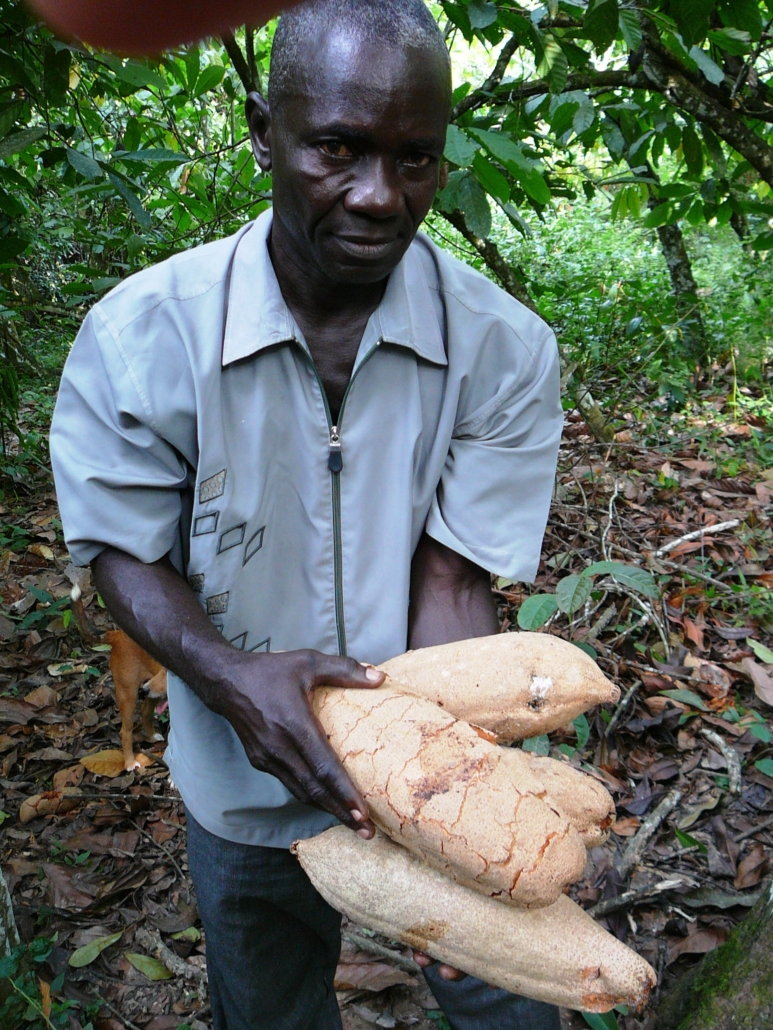
We think we have a solution though – trees. And not any old trees but trees that help to fertilise the soil, trees that stabilise the soil, trees that produce things to provide more income for the farmers and trees that may have been forgotten about since they were all cut down a long time ago but which could produce fruit, nuts and medicine that would make money for the people.
First, we need to improve the land that people are farming. We can do this by planting shrubs and trees that improve the soil by taking nitrogen out of the air and fixing it in the soil so crops can use it. We can also improve the soil’s fertility by adding animal dung and compost and make the soil less easily eroded by planting along the contour and making soil bunds and terraces. This is called ‘land restoration’ so that instead of fields just growing crops to turn into food, the landscape becomes a patchwork of fields, hedges, woodland and forest. This could help to close the yield gap by making the land more productive, but it also becomes more resilient to soil erosion and at the same time captures carbon to start replacing the carbon lost when the forests were cut down.
This helps the environment but doesn’t really help the farmers earn much more money. This is where using trees that produce things like fruit, nuts, seeds and medicines come in. We know from work in wetter parts of Africa that people know which trees produce things that people in the past found useful. The idea then is to ask the people which trees they think they would like to grow, to pick the best of those (called elite trees) and to multiply them by vegetative propagation so we have loads of the best tree types. We can then look at what processing is needed to be able to sell the fruits, nuts or medicines in the market. The processing can then be done by the farmers and their families which will bring in income that they can then invest in being able to farm better and grow a greater variety of cereals, vegetables and tree crops. In the end we will have a restored, greener environment with richer, healthier farmers and a good community spirit producing a huge variety of products. We call this Land Maxing.
A summary of the TAAI Land Maxing Programme for funders
Tropical agriculture and livelihoods dependent on agriculture in the tropics are in crisis. An ever-growing population has often led to unsustainable land use with little or no fallow. This has led to soil erosion, land degradation and disruption of the soil nutrient cycle on cultivated land, and deforestation as farmers seek new land. It is becoming increasingly difficult to sustain livelihoods since low productivity of staple food crops has led to yield gaps (the difference between potential and actual yield) which in turn leads to increased poverty, food insecurity and societal breakdown.
This low productivity requires farmers to spend more time on the land leaving them without a source of on- or off- farm income that could be used to purchase inputs (eg fertiliser, improved seed). All this is exacerbated by climate change which, in many parts of the tropics, has reduced rainfall reliability resulting in an increased frequency and severity of droughts as well as an increase in the severity of rainfall events resulting in soil erosion and flooding. In capital terms, the breakdown of natural capital has led to the breakdown of human and social capital.
All this has led to a reduction in farmers’ resilience leading to rural-urban migration and migration further afield.
The Tropical Agricultural Association International (TAAI) has identified a potential opportunity to address these yield gaps by improving and utilising currently neglected indigenous trees. This programme aims to test an approach developed in West Africa, in the drier areas of East and Southern Africa by adding ‘Land Maxing’ to existing land restoration projects in Malawi, Kenya and Ethiopia using TAAI expertise for project management and enhancing local capacity. The intention is not to replace the ongoing projects but to enhance them.
Land Maxing is part of an agroforestry-based, three-component, multi-functional agriculture model in which the first component is the restoration of soil fertility, biodiversity and other agroecological functions, and diversifying agricultural activities. This can be achieved by incorporating N-fixing agroforestry into the farming system while also addressing soil fertility and land management through improved soil fertility management, the promotion of soil and water conservation measures, water harvesting, small-scale irrigation and the reforestation of streamlines and marginal land. This will help to close the yield gap by making the land more productive, but it also becomes more resilient to soil erosion and begins to sequester carbon to begin replacing the carbon lost to deforestation.
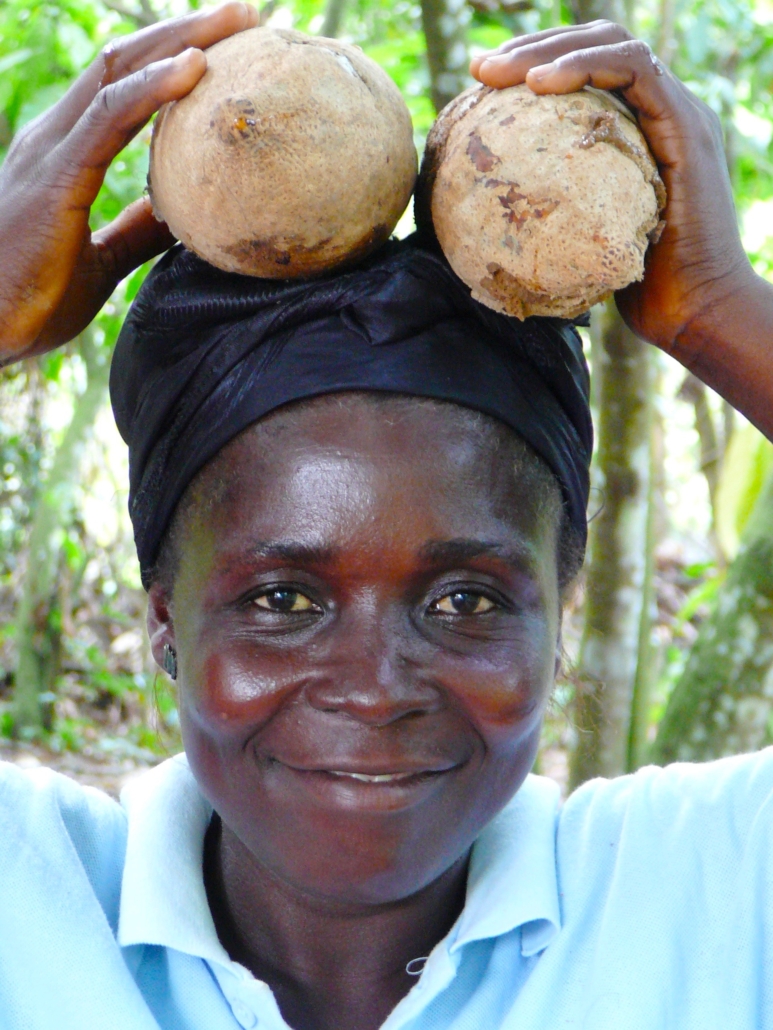
Land Maxing adds a second and third component to such land restoration efforts. The second component is the domestication of a wide range of culturally important, indigenous, food and medicinal trees using decentralised, low-technology, rapid, vegetative propagation techniques. These are carefully selected and then vegetatively propagated by local communities as elite cultivars using stem cuttings which are much quicker, simpler and cheaper than traditional improvement and multiplication techniques. Growing these trees contributes significantly to the land restoration efforts.
The third component – commercialisation – processes and packages their products locally for wider trade and business development. There is potential for further development of these elite cultivars using market-oriented ideotype selection for the creation of new, local enterprises.
Together these components diversify farming systems and the landscape creating a more resilient mosaic of cultivated and wooded land as well as crucially also generating income to fully rehabilitate agroecosystems and greatly enhance social and economic livelihoods. Importantly this is a grassroots community-based approach using low-technology techniques within a bottom-up participatory programme in which the farmers themselves are both the drivers of innovation and the beneficiaries of their work. Land Maxing is therefore regenerative, remunerative and transformative for farming communities in the tropics and restores natural capital leading to improvements in human and social capital and the development of physical and financial capital.


